
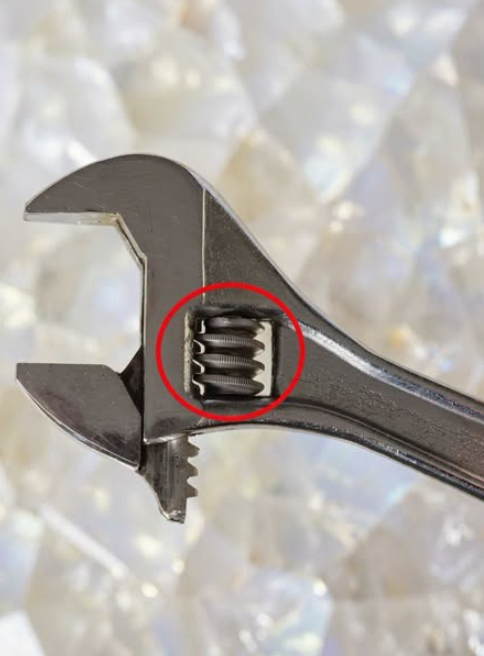
The adjustable wrench is one of the most familiar tools found in household toolboxes, garages, workshops, and maintenance kits. Its simple design makes it look easy to use: turn the adjustment wheel, fit the jaws around a nut, and apply pressure. However, this apparently straightforward tool can cause significant damage when used incorrectly.
A poorly adjusted wrench may round the corners of a nut, slip suddenly, damage a pipe fitting, scratch a finished surface, or even injure the person using it. In some cases, incorrect technique can also bend the moving jaw or permanently damage the adjustment mechanism.
The adjustable wrench is extremely useful because one tool can fit many different sizes of nuts and bolts. However, this versatility does not mean that it is always the best tool for every repair. It requires careful adjustment, correct positioning, controlled force, and regular maintenance.
Many people treat an adjustable wrench as a universal replacement for fixed-size wrenches, sockets, pliers, and torque tools. That is where many problems begin. Understanding the limitations of the tool is just as important as knowing how to hold it.
Below are seven common mistakes that can ruin repairs, damage fasteners, and shorten the life of your tools. You will also learn the correct techniques to use an adjustable wrench safely and effectively.
Understanding How an Adjustable Wrench Works
Before looking at the most common mistakes, it helps to understand the basic parts of the tool.
An adjustable wrench has:
- A fixed jaw
- A movable jaw
- An adjustment screw or worm gear
- A handle
- A flat opening designed to grip two opposite sides of a nut or bolt head
Turning the adjustment screw moves one jaw closer to or farther away from the fixed jaw. This allows the wrench to fit different sizes of fasteners.
The fixed jaw is generally stronger and more stable than the movable jaw. For this reason, the direction in which the tool is positioned matters. When the wrench is used correctly, most of the force is transferred through the fixed jaw rather than the weaker moving section.
The tool works best when both jaws sit flat against the sides of the fastener. If the jaws only touch the corners, or if there is too much space between the wrench and the nut, the tool can slip and round off the edges.
1. Treating It Like a Fixed-Size Wrench
One of the most common mistakes is assuming that an adjustable wrench can completely replace a fixed open-end wrench, combination wrench, or socket.
Although an adjustable wrench can fit many sizes, it rarely provides the same precise contact as a correctly sized fixed wrench. A fixed wrench is manufactured to fit a specific fastener size. Its jaws grip the flat sides of the nut closely and evenly.
An adjustable wrench has a moving jaw and an adjustment mechanism. Even when carefully adjusted, there may still be a small amount of movement or flex. Under heavy pressure, that slight movement can increase the risk of slipping.
This becomes especially dangerous when working with:
- Rusted nuts
- Very tight bolts
- High-torque applications
- Automotive suspension parts
- Heavy machinery
- Gas fittings
- Brake components
- Delicate plumbing connections
Using an adjustable wrench in these situations may round the fastener or damage the tool.
How to avoid this mistake
Use a fixed-size wrench or socket whenever you know the exact size of the nut or bolt. A socket usually surrounds more of the fastener and distributes force more evenly.
Reserve the adjustable wrench for light to moderate tasks, temporary repairs, situations involving unusual fastener sizes, or jobs where carrying a complete wrench set is impractical.
If a fastener requires significant force, do not automatically choose a larger adjustable wrench. Select a properly sized socket, box-end wrench, breaker bar, or torque wrench instead.
2. Failing to Adjust the Jaw Properly
A loose fit is one of the fastest ways to damage a nut or bolt.
When the wrench opening is slightly larger than the fastener, the jaws do not press evenly against the flat surfaces. Instead, the tool may shift and place pressure on the corners. Because the corners are weaker than the flat sides, they can become rounded very quickly.
Once a nut is rounded, removing it may require locking pliers, extraction sockets, cutting tools, heat, or replacement of the entire component.
Even a small gap can be enough to create problems, especially when substantial force is applied.
The correct adjustment method
Place the wrench over the nut and turn the adjustment screw until both jaws touch the flat sides firmly. There should be almost no visible play.
After adjusting it, gently move the handle back and forth without applying heavy pressure. If the wrench rocks around the nut, tighten the jaw slightly more.
The wrench should fit snugly, but you should not force the adjustment screw so tightly that the tool becomes difficult to remove.
It is also important to check the fit again during the repair. Repeated movement can cause the jaw to loosen slightly, especially on older or heavily worn tools.
A useful habit
Before every pull, press the wrench firmly onto the nut and confirm that the jaws are still fully seated. This simple habit can prevent slipping and reduce damage.
3. Using It on Fasteners That Are Too Small
Adjustable wrenches are available in many sizes, but larger models are not designed for very small nuts, screws, or fittings.
When the fastener is tiny compared with the wrench, the tool becomes awkward and difficult to control. The jaws may be too thick to reach the fastener properly, and the weight of the tool can make precise movement difficult.
This often happens during work on:
- Small appliances
- Bicycles
- Electronics
- Furniture hardware
- Hobby projects
- Small plumbing fixtures
- Model equipment
- Garden tools
Trying to use a large adjustable wrench on a tiny nut may damage nearby surfaces or cause the wrench to slip.
Better tool choices
For small fasteners, use:
- A correctly sized open-end wrench
- A small socket and ratchet
- A nut driver
- A precision wrench
- A small adjustable wrench
- A suitable pair of pliers only when the fastener is not intended to be reused
Choose a tool that matches the scale of the job. Better control usually leads to cleaner, safer results.
4. Pointing the Wrench in the Wrong Direction
The direction of the adjustable wrench is not just a matter of comfort. It affects strength, control, and the risk of slipping.
The fixed jaw is more stable than the movable jaw. Therefore, the wrench should generally be positioned so that the fixed jaw receives most of the turning force.
When pulling the handle, arrange the tool so the force pushes the fastener against the fixed jaw. The movable jaw should be on the opposite side of the direction of rotation.
If the wrench is positioned the wrong way, the moving jaw may be forced outward. This can increase play, reduce grip, and damage the adjustment mechanism.
Why pulling is usually safer than pushing
Whenever possible, pull the wrench toward your body rather than pushing it away.
Pulling gives you more control and reduces the chance of losing balance if the nut suddenly loosens. When pushing, your hand may strike a nearby surface if the wrench slips.
However, make sure your body is positioned safely. Do not pull with your face directly over the wrench, and avoid placing your hand near sharp edges, hot surfaces, or moving parts.
Check the direction before applying force
Take a moment to look at:
- Which jaw is fixed
- Which direction the nut must turn
- Where your hand will move if the wrench slips
- Whether nearby objects could cause injury
A few seconds of planning can prevent both damaged parts and painful accidents.
5. Applying Too Much Force
An adjustable wrench is not designed to handle unlimited force.
Some people try to loosen stubborn nuts by pulling as hard as possible, standing on the handle, striking it with a hammer, or extending the handle with a metal pipe. These methods can be dangerous.
Excessive force may:
- Bend the handle
- Spread the jaws
- Damage the adjustment screw
- Break the wrench
- Round the fastener
- Crack a fitting
- Damage threads
- Cause sudden loss of balance
- Injure hands or wrists
The tool may appear strong, but the movable jaw and adjustment mechanism are vulnerable under extreme loads.
Never use a cheater pipe unless the tool is designed for it
Sliding a pipe over the handle increases leverage dramatically. This also multiplies the stress placed on the wrench and fastener.
A tool that feels difficult to turn may suddenly release, causing the user to fall or strike nearby equipment.
For very tight fasteners, use a tool specifically designed to provide extra leverage, such as:
- A breaker bar
- A long-handled socket wrench
- A box-end wrench
- A penetrating oil treatment
- A correctly rated impact wrench
- A professional extraction tool
Use a torque wrench for precise tightening
Many mechanical parts must be tightened to a specific torque value. Tightening too little may allow parts to loosen. Tightening too much may stretch threads, crush seals, distort components, or cause failure.
An adjustable wrench cannot measure torque. For automotive parts, machinery, structural fittings, and other precision applications, use a calibrated torque wrench and follow the manufacturer’s specification.
When a fastener will not move
Do not immediately apply more force. First check whether:
- You are turning in the correct direction
- The nut is reverse-threaded
- Rust or corrosion is present
- A locking compound was used
- The fastener is under tension
- Another part must be held with a second wrench
- Heat-sensitive materials are nearby
Applying force without understanding the cause of resistance can make the problem worse.
6. Neglecting Cleaning and Maintenance
Like every hand tool, an adjustable wrench works better and lasts longer when properly maintained.
Dust, metal particles, grease, rust, paint, and debris can collect around the adjustment screw. Over time, the moving jaw may become stiff or uneven. A difficult adjustment mechanism makes it harder to obtain a snug fit.
A rusty or damaged wrench may also slip under pressure.
How to clean an adjustable wrench
After use, wipe the tool with a clean cloth. Remove oil, moisture, dirt, and metal fragments.
For stubborn dirt, use a small brush to clean the adjustment screw and the groove where the moving jaw travels.
If the wrench has been exposed to water, dry it thoroughly before storage.
Apply a small drop of light machine oil to the adjustment screw. Turn the screw several times so the oil spreads through the mechanism. Wipe away excess oil to prevent dust from sticking.
Inspect the wrench regularly
Look for:
- Cracks in the handle
- Bent or spreading jaws
- Excessive movement in the movable jaw
- Damaged teeth on the adjustment screw
- Rust
- Sharp burrs
- Difficulty opening or closing the jaw
- A wrench that will not hold its adjustment
A badly worn adjustable wrench should be replaced. Continuing to use a damaged tool can ruin fasteners and create a safety hazard.
Store it correctly
Keep the wrench in a dry toolbox or tool cabinet. Avoid leaving it outside, in damp basements, or near corrosive chemicals.
It is often helpful to store the wrench with the jaws slightly open. This reduces pressure on the adjustment mechanism and makes the tool easier to inspect before the next use.
7. Ignoring Fragile or Soft Materials
Not every nut or fitting can withstand the pressure of a steel adjustable wrench.
Materials such as aluminum, copper, brass, plastic, chrome-plated metal, and decorative finishes can scratch, flatten, or deform easily.
This is especially important when working on:
- Polished plumbing fixtures
- Chrome faucets
- Brass fittings
- Soft aluminum parts
- Plastic connectors
- Instrument components
- Decorative hardware
- Thin tubing
A normal adjustable wrench may leave visible tooth marks or crush the fitting.
Use protective jaw covers
For delicate surfaces, use a wrench with smooth, non-marring jaw covers. Some adjustable wrenches are sold with plastic or rubber inserts designed for finished surfaces.
You can also place a suitable protective material between the wrench and the part, although this may reduce grip. Use only thin material and make sure the wrench remains stable.
For plumbing fixtures, a strap wrench is often a better choice because it grips around the surface without using hard metal jaws.
Do not overtighten soft fittings
Soft materials can deform before they feel fully tight. Tighten gradually and stop when the connection is secure.
If the repair involves compression fittings, plastic threads, or manufacturer-specified limits, follow the instructions carefully. Excessive tightening may damage seals, crack fittings, or create leaks.
Additional Mistakes That Can Cause Problems
The seven mistakes above are among the most common, but several other habits can also reduce safety and accuracy.
Using the Wrench Like a Hammer
An adjustable wrench should never be used for striking objects.
Hitting nails, bolts, pipes, or other tools with the wrench can deform the jaws, damage the adjustment mechanism, and create cracks in the metal.
Use a hammer designed for the task.
Using a Damaged Wrench
A bent handle, loose jaw, worn adjustment screw, or cracked body can fail without warning.
Do not try to repair a severely damaged wrench by bending it back into shape. Metal fatigue may remain even when the tool looks straight again.
Gripping Round Objects
The flat jaws of an adjustable wrench are designed for nuts, bolts, and fittings with parallel sides. They are not ideal for round pipes.
Using the wrench on round objects provides limited contact and can cause slipping.
For pipes, use a pipe wrench, strap wrench, or another tool designed for round surfaces.
Striking the Handle to Loosen a Nut
Hitting the handle with a hammer can shock-load the wrench and damage both the tool and the fastener.
If additional force is needed, use a breaker bar, penetrating oil, controlled heat where safe, or a properly rated impact tool.
Working at an Angle
The jaws should sit squarely against the nut. Holding the wrench at an angle reduces contact and increases pressure on the corners.
Make sure the wrench is fully seated before turning.
Using the Wrong Size Wrench
A very large adjustable wrench may technically fit a small nut, but it can be difficult to control. A wrench that is too small may not open far enough or may lack the necessary strength.
Choose a wrench size appropriate for the fastener and the amount of torque required.
How to Use an Adjustable Wrench Correctly
A careful step-by-step approach can improve accuracy and reduce damage.
Step 1: Inspect the tool
Before use, check that the jaws are straight, the adjustment screw moves smoothly, and the wrench has no cracks or severe rust.
Step 2: Inspect the fastener
Look for rounded edges, corrosion, damaged threads, or signs that the fastener has already been overtightened.
Step 3: Open the jaws
Turn the adjustment screw until the opening is slightly wider than the nut or bolt head.
Step 4: Position the wrench fully
Slide the jaws over the flat sides of the fastener. Push the wrench as far onto the nut as possible.
Step 5: Tighten the adjustment
Turn the screw until the jaws fit snugly with minimal play.
Step 6: Check the direction
Position the wrench so the fixed jaw carries most of the force.
Step 7: Pull smoothly
Apply steady pressure. Avoid sudden jerking movements.
Step 8: Recheck the fit
After each partial turn, reposition the wrench and confirm that the jaw has not loosened.
Step 9: Stop if it begins to slip
Do not continue forcing a slipping wrench. Remove it, inspect the fastener, adjust the jaw, or select a more suitable tool.
When an Adjustable Wrench Is a Good Choice
An adjustable wrench is useful for:
- Light household repairs
- Assembling furniture
- Holding a nut while another tool turns the bolt
- Emergency repairs
- Basic plumbing adjustments
- Bicycle accessories
- Garden equipment
- Unusual fastener sizes
- Situations where several wrench sizes would otherwise be required
Its versatility makes it a valuable tool, especially for quick maintenance jobs.
When You Should Choose Another Tool
Use a fixed wrench, socket, or specialty tool when:
- High torque is required
- The fastener is rusted or seized
- The nut must be tightened to a precise torque
- Space is limited
- The fastener is very small
- The surface is fragile or decorative
- The fastener is already rounded
- The work involves critical safety components
- The job requires repeated turning
- The part is part of a gas, brake, pressure, or structural system
Selecting the correct tool is not a sign that the adjustable wrench is inadequate. It is simply good repair practice.
Safety Precautions
Always wear appropriate eye protection when working with rusty, damaged, or heavily tightened fasteners. Small pieces of metal or corrosion can break loose unexpectedly.
Wear gloves when handling sharp or dirty components, but avoid loose gloves around rotating machinery.
Make sure the equipment is switched off and disconnected from power before beginning repairs.
For plumbing work, turn off the water supply when necessary. For gas connections, use qualified professional assistance. For automotive repairs, support vehicles correctly with approved jack stands.
Never position your face or body directly in the path of the wrench. If the fastener suddenly releases, the tool may move quickly.
Keep hands away from pinch points and sharp edges.
How to Choose a Good Adjustable Wrench
A quality wrench should have:
- Smooth jaw movement
- Minimal play in the movable jaw
- Clearly marked size measurements
- Strong, well-finished metal
- A comfortable handle
- Parallel jaw faces
- A precise adjustment screw
- No sharp edges or casting defects
Cheaper tools may work for occasional light repairs, but poorly made jaws and loose adjustment mechanisms can damage fasteners more easily.
For frequent use, investing in a durable, well-machined wrench is usually worthwhile.
Frequently Asked Questions
Can an adjustable wrench be used for plumbing?
Yes, it can be used for many plumbing fittings, but caution is necessary. Avoid damaging chrome, brass, copper, or plastic surfaces. Use smooth jaw covers or a strap wrench for delicate fixtures.
Should the wrench be pushed or pulled?
Pulling is generally safer because it provides better control. However, the most important point is to position the fixed jaw so it carries the main force.
Why does my adjustable wrench keep slipping?
The jaw may be too loose, the fastener may already be rounded, the wrench may be worn, or the tool may be positioned at an angle. Stop and correct the problem before continuing.
Can I use a pipe to extend the handle?
This is not recommended unless the tool is specifically designed for added leverage. A pipe can overload the wrench and cause sudden failure.
Can an adjustable wrench replace a socket set?
It can handle many light repairs, but it should not replace sockets for high-torque, repetitive, precise, or safety-critical work.
How often should the adjustment screw be lubricated?
Lubricate it whenever it begins to feel stiff or after exposure to moisture, dirt, or heavy use. A small amount of light machine oil is usually enough.
What should I do with a rounded nut?
Stop using the adjustable wrench. Try a properly sized extraction socket, locking pliers, a nut splitter, penetrating oil, or professional assistance depending on the situation.
A Versatile Tool That Requires Precision
The adjustable wrench remains one of the most useful tools for household repairs and general maintenance. Its ability to fit multiple fastener sizes makes it practical, portable, and convenient.
However, versatility does not eliminate the need for care. Proper jaw adjustment, correct orientation, controlled pressure, tool maintenance, and awareness of material strength are essential.
The most important rule is simple: the wrench should fit tightly against the flat sides of the fastener. If it feels loose, unstable, or difficult to control, stop and reassess the situation.
By avoiding excessive force, selecting the correct tool for demanding jobs, and maintaining your wrench properly, you can protect your equipment, preserve fasteners, and complete repairs more safely.
A well-used adjustable wrench can serve you for many years. A carelessly used one can damage a repair in seconds. Technique, patience, and tool selection make all the difference.