
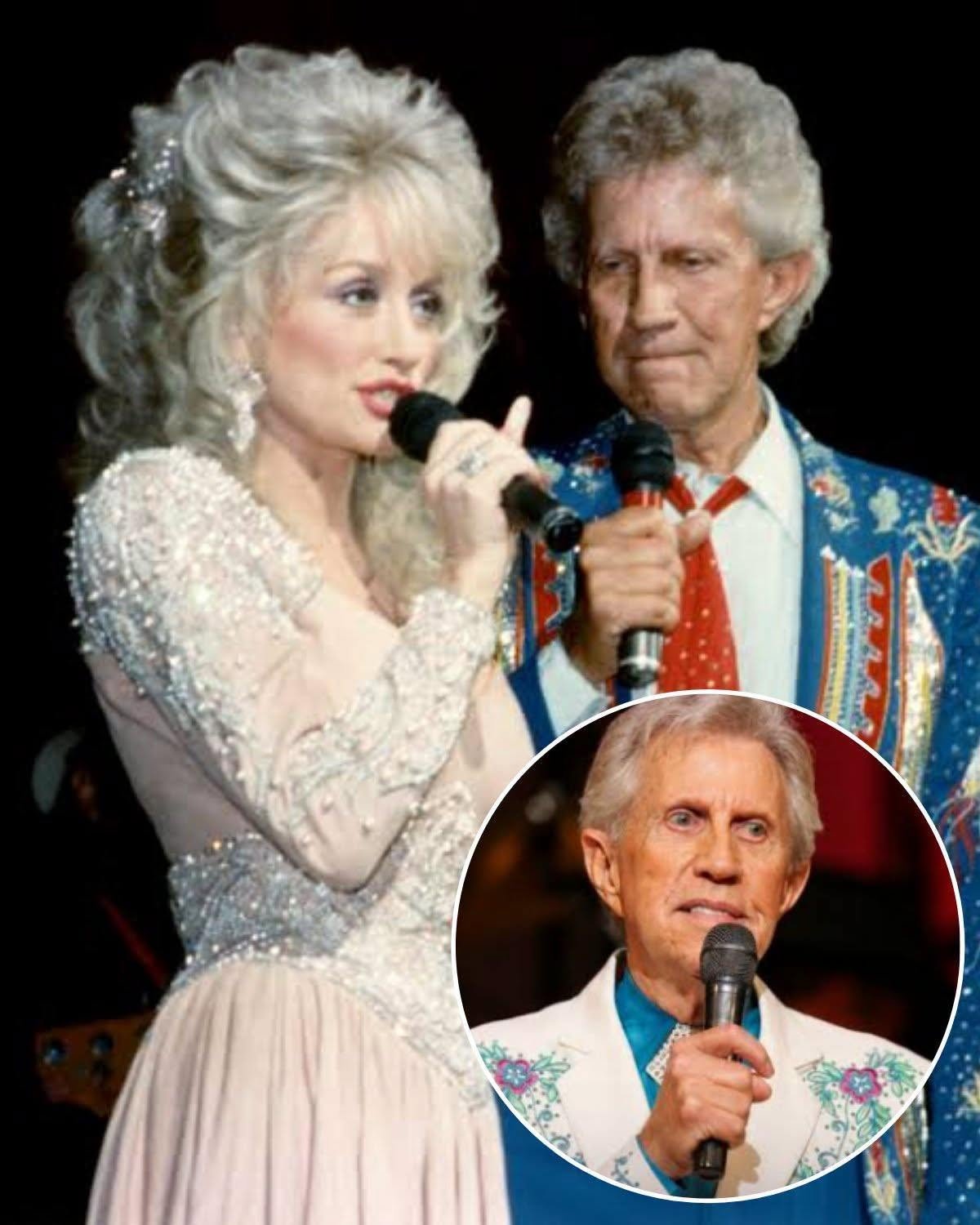

The Final Days of a Country Music Legend
For decades, their story had been told as one of country music’s most painful professional separations. Wagoner had helped introduce Dolly to a national television audience, giving the young Tennessee singer an opportunity that transformed her career. But when she decided to pursue independence, their partnership collapsed into disagreements, financial disputes, and a lawsuit that reportedly sought millions of dollars. To many observers, Porter became the controlling mentor who could not accept that his former partner had become an international superstar.
But their relationship was never as simple as the headlines suggested. Behind the legal arguments and years of public speculation existed a powerful artistic connection between two people who had once depended on each other for success. By the time Wagoner entered his final days, their long estrangement had already given way to reconciliation. Dolly visited him during his final illness, offering a deeply personal reminder that even relationships damaged by pride and disappointment can find peace before it is too late.
A Young Woman Who Walked Into His World
To understand the emotional significance of their reconciliation, one must return to 1967, when a 21-year-old Dolly Parton joined The Porter Wagoner Show. At the time, Wagoner was already an established country music star, known for his distinctive television presence, elaborate stage costumes, and ability to connect with working-class audiences across America. His syndicated television program had become an important platform for country performers, reaching households far beyond Nashville.
Dolly arrived with extraordinary talent, determination, and a collection of original songs, but she was still relatively unknown to the national audience. Her introduction to Wagoner’s show was not immediately embraced by everyone. Some viewers missed his previous singing partner, Norma Jean, and Dolly faced the difficult task of winning over an audience that had not necessarily asked for someone new. Nevertheless, her personality, powerful songwriting, and unmistakable Appalachian voice gradually established her as an essential part of the program.
The partnership soon became one of country music’s most successful collaborations. Their recordings, television appearances, and live performances brought them widespread recognition, while their contrasting personalities created an appealing dynamic. Wagoner projected authority and traditional showmanship, while Dolly offered warmth, humor, and a remarkable ability to express deeply personal emotions through music. Together, they created something neither could have achieved in quite the same way alone.

When Success Began to Pull Them Apart
As the years passed, Dolly Parton’s ambitions expanded beyond her role on Wagoner’s television program. She wanted greater creative freedom, the opportunity to develop her songwriting independently, and the ability to establish herself as a solo artist. For someone who had worked tirelessly to create her own career, independence was not simply a professional preference. It was an essential part of her identity.
Wagoner, however, had invested years in building their partnership. He had provided television exposure, professional guidance, and access to an established country music audience. From his perspective, Dolly’s departure threatened a successful arrangement that had become central to his professional life. Their disagreements grew increasingly difficult as the two entertainers struggled to reconcile their different expectations.
Dolly eventually left the partnership in 1974. The separation was painful, and its consequences extended well beyond the stage. Wagoner later pursued legal action involving their professional and financial arrangements, seeking a reported $3 million. The dispute was eventually settled out of court. Although the lawsuit became one of the most frequently repeated details of their relationship, it cannot establish that grief rather than money motivated his actions. The personal emotions behind the conflict were undoubtedly complex, and neither public speculation nor dramatic retellings can fully explain them.
The Song That Said What Words Could Not
Perhaps the most extraordinary part of Dolly Parton’s departure was the song she wrote as a farewell to Wagoner. Rather than expressing anger or resentment, she composed a deeply emotional declaration of gratitude and separation. That song was I Will Always Love You, a composition that would eventually become one of the most recognizable love songs in modern music history.
Although many listeners interpret the song as a romantic farewell, its original inspiration came from Dolly’s decision to leave her professional partnership with Porter. The lyrics expressed the difficult truth that caring for someone does not always mean remaining beside them. Sometimes, love and respect require accepting that two people must follow different paths, even when the separation causes pain.
Over time, however, the song became a lasting symbol of their connection. Its enormous success, particularly after Whitney Houston’s internationally celebrated recording, ensured that a farewell originally written for one man would touch millions of people who knew little about the relationship behind it.

The Reconciliation That Changed Everything
Years after their painful separation, Dolly Parton and Porter Wagoner gradually found their way toward reconciliation. Time had changed both their lives. Dolly had become one of the world’s most successful entertainers, while Wagoner remained an important figure in country music history. Their careers had followed different paths, but the artistic bond they once shared could not be erased by legal documents or decades of distance.
In 2007, Dolly participated in a celebration marking Wagoner’s 50th anniversary as a member of the Grand Ole Opry. Their reunion offered a powerful public demonstration that the bitterness associated with their earlier separation no longer defined their relationship. For longtime country music fans, seeing the two entertainers together again carried emotional significance. They were no longer simply the ambitious young singer and the established television star. They were two aging legends who had helped shape each other’s lives.
Dolly’s Final Goodbye to Porter Wagoner
When Porter Wagoner became gravely ill in October 2007, Dolly Parton was among those who visited him. Their reconciliation had already occurred, making her presence during his final illness especially meaningful. The woman who had once struggled to separate her career from his was now able to offer comfort to the man who had played such an important role in her early success.
Accounts of his final days confirm the importance of their renewed friendship, but the sensational claim that Wagoner delivered a previously hidden deathbed confession explaining the lawsuit as grief rather than greed is not supported by reliable public documentation. No verified final statement establishes that interpretation. The real emotional power of their story lies in something more substantial than an unconfirmed secret: after years of conflict, they had found a way to treat each other with affection and respect again.
Wagoner died on October 28, 2007, at the age of 80. His death marked the end of an extraordinary country music career that had included hit recordings, television success, and decades of performances at the Grand Ole Opry. For Dolly, the loss also meant saying goodbye to someone whose influence on her life had been both profound and complicated. Their relationship had included opportunity, conflict, disappointment, and ultimately reconciliation. Few professional partnerships in country music history had carried such a remarkable combination of emotions.
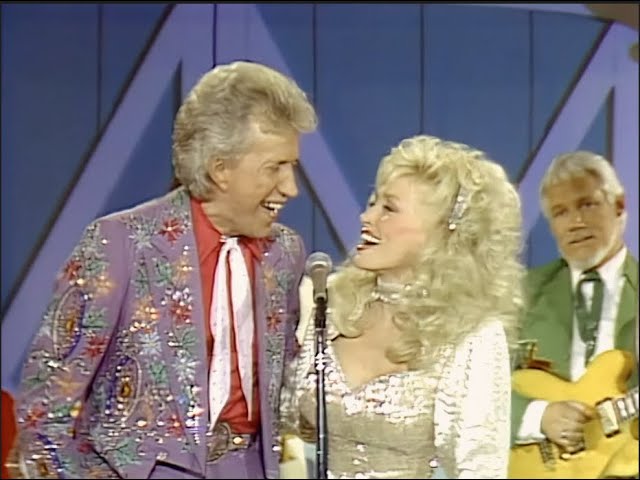
The Truth Behind a Friendship That Refused to Disappear
The story of Porter Wagoner and Dolly Parton continues to resonate because it challenges the idea that human relationships can be divided neatly into heroes and villains. Wagoner undoubtedly helped Dolly reach a wider audience, and Dolly’s talent contributed significantly to the success of their partnership. Their eventual separation reflected competing ambitions, complicated business arrangements, and personal disagreements that neither could easily resolve at the time.
What makes their history extraordinary is not the lawsuit alone, nor the speculation about what Porter may have felt during his final days. It is the fact that two people who experienced such a painful separation eventually recognized the value of what they had shared. Their reconciliation reminds us that the meaning of a relationship cannot always be measured by its most difficult moment.
For Dolly Parton, the song she wrote to say goodbye to Porter became an enduring expression of gratitude and independence. For Wagoner, his legacy includes not only the entertainment empire he built but also his role in helping introduce one of country music’s greatest artists to a national audience. Their stories remain permanently connected, regardless of the conflicts that once divided them.
In the end, the most meaningful truth about Porter Wagoner and Dolly Parton may be the one their reconciliation demonstrated without any dramatic confession.
Sometimes, forgiveness does not change the past. It simply allows two people to remember each other with love instead of regret.
And decades after their professional partnership ended, the words of Dolly’s famous farewell still seem to capture the emotional heart of their story:
I Will Always Love You.