
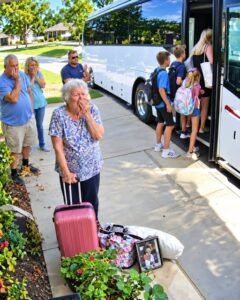
Cape May had always been that kind of place. You could go ten years without seeing someone, and one familiar street name could carry you backward in an instant.
“I remember you,” I said.
“And I remember Robert. I’m so sorry. I heard he passed.”
“Almost two years ago.”
“I’m sorry I didn’t reach out.”
“You didn’t know me well enough to need to.”
“That never stopped Robert.”
Despite everything, a laugh escaped me.
“No,” I said. “It certainly didn’t.”
Ellen let the silence settle.
Then her voice became professional again.
“You said you want to sell as soon as possible. Have you had an appraisal recently?”
“No.”
“Any mortgage?”
“No.”
“Any co-owner?”
“No.”
“Then we can move quickly, but not today quickly. I can give you a market analysis, discuss timing, and inspect the property. If you decide to list, we’ll need photographs, disclosures, and some paperwork.”
I looked toward the front window.
The spot where Brenda’s SUV had been parked was empty.
“Could you go by the house today?”
“I can.”
“My children are on their way there.”
That made Ellen pause again.
“Do they live there?”
“No.”
“Are they tenants?”
“No.”
“They’re family?”
“Yes.”
I heard my own answer and nearly laughed at the inadequacy of the word.
Family.
It could mean the people who knew your heart better than anyone.
It could also mean the people most capable of forgetting you had one.
“They have my keys,” I said.
“Do they know you’re considering selling?”
“No.”
“Margaret, I want to be clear about something. I’m happy to help you, but I don’t want you making a permanent financial decision because you’re hurt this morning.”
My fingers tightened around the receiver.
“I’m not confused.”
“I didn’t say you were.”
“I’m not senile either.”
“I didn’t say that.”
Her calmness embarrassed me.
“I’m sorry.”
“You don’t have to apologize. I’m a sixty-three-year-old woman who has raised three sons. I know exactly how a family can make you feel perfectly rational and completely furious at the same time.”
That drew another unwilling smile from me.
“I don’t know if I’m furious.”
“What are you?”
I thought about Brenda saying there was no room.
Douglas staring toward the street.
Gregory looking directly at me and saying nothing.
The children already buckled into their seats, cheerful and unaware.
“I think,” I said slowly, “I’m tired of everyone assuming I’ll be available whether they treat me well or not.”
Ellen was quiet.
“That sounds different from anger.”
“It feels different.”
“All right. Let me drive over and take a look. I won’t list anything until we speak again.”
“Thank you.”
“And Margaret?”
“Yes?”
“Don’t decide what the house means until you decide what you want your life to mean without Robert.”
That sentence followed me long after we hung up.
I remained in his chair for several minutes.
Then the doorbell rang.
It was Gertrude.
Of course it was Gertrude.
She stood on my porch wearing gardening gloves and the particular expression neighbors use when they know something is wrong but are determined to pretend they came over for an innocent reason.
“I have too many tomatoes,” she announced.
She held up a basket containing exactly three tomatoes.
I looked at them.
Then at her.
“Your garden produced too many of three tomatoes?”
She sighed.
“Margaret, I saw what happened.”
Heat climbed my neck.
“I figured.”
“So did half the street.”
“That makes it better.”
“It should. Nobody thinks poorly of you.”
“I didn’t say they did.”
“You’re standing like someone who thinks the whole neighborhood just witnessed her being discarded.”
That word struck too accurately.
I stepped aside.
Gertrude entered without another question.
We sat at my kitchen table.
The counters were strangely empty because nearly everything I had cooked was now somewhere on the Garden State Parkway.
Gertrude looked around.
“You spent all yesterday cooking, didn’t you?”
“Most of it.”
“For them.”
“I like cooking.”
“That wasn’t my question.”
I poured coffee for both of us.
We had known each other twenty-six years. There are people who earn the right to ask questions you would resent from anyone else.
“I called a real-estate agent,” I said.
Her eyebrows rose.
“For here?”
“For Cape May.”
She put her cup down.
“That’s a large decision for eight-fifteen in the morning.”
“Ellen said something similar.”
“Smart woman.”
“I own the house.”
“I know.”
“They act as though it belongs to everyone.”
“They grew up there.”
“So did half their friends.”
“Margaret.”
I looked away.
Gertrude reached across the table.
“I’m not saying don’t sell it. I’m asking whether selling the house and changing the family are the same decision.”
I hated when people I respected asked sensible questions.
“They left me standing on the sidewalk.”
“I know.”
“They took the keys.”
“I know.”
“They took the food.”
“I definitely know. I could smell those meatballs from my driveway.”
That almost made me laugh again.
Almost.
Gertrude squeezed my hand.
“You have every right to be hurt. You also have every right to stop making things easy for people who don’t consider you. But don’t make Robert’s house carry the whole burden of teaching that lesson.”
I stared at our joined hands.
“Then what do I do?”
“Start by not rescuing anybody from the consequences of what they chose this morning.”
That answer stayed with me.
Two hours later, Brenda called.
I watched her name flash across my phone.
For years, I had answered immediately.
A fever.
A forgotten school form.
A babysitting emergency.
A recipe.
A ride.
A question about where she had stored the Christmas ornaments in my own attic.
Margaret was always available.
Mom always picked up.
This time I let it ring three times.
Then four.
Then five.
Finally, I answered.
“Hello?”
“Mom, where’s the spare key?”
No hello.
No apology.
I glanced toward the small ceramic lighthouse above my refrigerator.
The spare Cape May key used to be hidden behind a loose piece of trim near the back porch. Robert had moved it the year before he died because Gregory kept forgetting to return his copy.
“I don’t know,” I said.
“What do you mean you don’t know?”
“I mean Robert moved it.”
A pause.
“Well, the front-door key you gave me isn’t working.”
Now I understood.
Robert had changed the front lock the previous winter after the old mechanism began sticking. He had given me two new keys.
I had given Gregory one.
The key Brenda had taken from the hook that morning was the old copy.
“What about Gregory’s key?” I asked.
“He says he doesn’t have it.”
Interesting.
“I gave him one.”
“Well, he says he doesn’t.”
In the background I heard Cooper laughing.
Then Paisley shouted, “Is Grandma coming?”
My chest tightened.
Brenda lowered her voice.
“Mom, can you call someone? We’ve been driving for hours.”
“You’re already there?”
“Yes.”
“And everyone is safe?”
“What kind of question is that?”
“A simple one.”
“Yes, everybody’s safe.”
“Good.”
“Mom.”
I could picture her standing on the porch, sunglasses pushed onto her head, irritated because life had refused to arrange itself around her expectations.
Then I heard another voice in the background.
A woman.
“Brenda?”
My daughter covered the phone, but not quickly enough.
“Who’s there?” I asked.
There was a brief silence.
“Some real-estate woman.”
So Ellen had arrived.
My stomach fluttered.
Not triumph.
Not satisfaction.
Something closer to fear.
A decision had become real.
“Her name is Ellen Parker,” I said.
“You sent a realtor?”
“Yes.”
“Why?”
“To look at the house.”
“For what?”
“You know what realtors do, Brenda.”
The silence that followed was so complete I could hear gulls through her phone.
“Are you selling?”
“I’m considering it.”
“What?”
“I’m considering selling my property.”
“Because of this morning?”
“Because I’ve realized I need to reconsider several things.”
“Mom, this is ridiculous.”
That word hardened something in me.
Not into anger.
Into clarity.
“Please don’t call my decision ridiculous.”
“I mean—come on. We had a misunderstanding.”
“No, Brenda.”
“What?”
“We did not misunderstand each other. You told me not to get in the car.”
“The cars were full.”
“You said I would get in the way.”
“You know how trips are with the kids.”
“And yet the food I made managed to find room.”
She exhaled sharply.
“Mom.”
I waited.
For once, I did not hurry to make the silence comfortable for her.
She spoke more softly.
“I didn’t mean it the way it sounded.”
“How did you mean it?”
No answer came.
That hurt more than I expected.
Brenda had always been quick with words.
Even as a child, she could explain why the broken lamp was really the fault of gravity.
Now she had nothing.
Finally she said, “What are we supposed to do?”
I looked around my kitchen.
There it was.
The question that had organized most of my adult life.
What are we supposed to do?
And behind it, usually unspoken:
Mom will know.
Mom will fix it.
Mom will make a bed.
Mom will cook dinner.
Mom will change her schedule.
Mom will bring the missing sweater.
Mom will smooth things over.
Mom will absorb the inconvenience so no one else has to.
“You’re adults,” I said gently. “You’ll figure it out.”
Her voice changed.
“Are you saying we can’t stay here?”
“I’m saying I haven’t invited you to stay there without me.”
“Mom, we’ve used the house for years.”
“Yes.”
“You told us it was a family house.”
“I said it was a house for the family. That isn’t the same as saying it belongs to everyone.”
“Gregory drove all the way down here.”
“So did you.”
“And what are we supposed to tell the kids?”
“That Grandma had a change of plans and you’re going to have a different weekend.”
I heard Cooper shout again in the background.
“Can we go to the beach?”
“Of course you can,” I said, though he had not been speaking to me. “The beach is still there.”
Brenda lowered her voice further.
“Are you doing this to punish us?”
I thought carefully before answering.
“No. If I wanted to punish you, I would spend the weekend thinking of ways to make you unhappy. I don’t want that. I want to stop pretending I’m comfortable with the way things have been.”
“What way?”
That question stunned me.
Not because it was cruel.
Because I believed she meant it.
“You truly don’t know?”
Another silence.
Douglas said something in the background.
Then Ellen’s voice drifted closer.
“I can come back another day.”
“No,” Brenda told her.
I heard footsteps.
“Mom, can you tell this woman to leave?”
“No.”
“Why?”
“Because I asked her to be there.”
“Are you really going to sell Grandpa’s house?”
The words came from Paisley.
Not Brenda.
My granddaughter must have come close enough to hear.
Everything inside me softened at once.
“Sweetheart,” I said, “Grandpa and I made that house together, and I’m just thinking about what should happen next. Nobody needs to worry.”
“Can we still have cake?”
Children have a gift for finding the only question that matters.
I closed my eyes.
“Yes, honey. You can still have cake.”
“Mom,” Brenda said quietly, “I’ll call you later.”
The line disconnected.
For the next hour I cleaned a kitchen that was already clean.
At noon, Ellen called.
“I’m back in my car,” she said.
“How bad was it?”
“The house?”
“My family.”
“They were surprised.”
“That’s diplomatic.”
“I sell real estate. Diplomacy keeps the lights on.”
I sat down.
“What did you see?”
“The house is in excellent condition. Robert kept up with things. There are cosmetic changes a buyer might make, but nothing urgent.”
“What would it sell for?”
She gave me a number.
I asked her to repeat it.
The second time sounded even more impossible.
Robert and I had bought the place when Cape May prices were nothing like they were now. We had stretched ourselves thin for years, renting it occasionally and doing repairs ourselves.
The current value was more than four times what we had paid.
“You could list this week,” Ellen said. “But I still think you should sleep on it.”
“I will.”
“There’s another reason.”
Something in her voice changed.
“What?”
“I found a folder in the hall desk.”
My heart jumped.
“What folder?”
“Robert’s name is on it. I didn’t open it. I wouldn’t. But it says ‘Margaret — Cape May’ across the front.”
I stood without realizing it.
“Where?”
“Bottom drawer of the little blue desk by the stairs.”
That desk had belonged to Robert’s mother.
I knew every drawer.
Or thought I did.
“What does it look like?”
“Cream-colored envelope. Sealed. Fairly thick.”
Robert had been a careful man.
He labeled everything.
Tax records.
Appliance warranties.
Insurance.
Photographs.
He did not write my name on things without a reason.
“Did my children see it?”
“I don’t think so.”
“Please leave it where it is.”
“I already did.”
After we hung up, I stared toward the hallway.
Robert had been dead twenty-two months.
For twenty-two months, I had believed the house contained memories and nothing more.
Now, suddenly, there was something waiting inside it.
Something he had meant specifically for me.
That evening, Gregory called.
Unlike Brenda, he began with an apology.
At least I thought he did.
“Mom, I should’ve said something this morning.”
I waited.
“I knew Brenda was being harsh.”
“You knew more than that.”
“Yes.”
“Why didn’t you say anything?”
He sighed.
“Because I didn’t want another argument.”
“So you let me have it instead.”
“That’s not fair.”
“No?”
He was silent.
Then he surprised me.
“No,” he said quietly. “Actually, it is.”
I sat on the edge of my bed.
His voice sounded tired.
“We should never have left without you.”
“Thank you.”
“I mean it.”
“I know.”
“Brenda thinks you’re selling because you’re angry.”
“I’m considering selling because I’m thinking.”
“About what?”
“My future.”
Another pause.
“Does that include us?”
The vulnerability in his question caught me off guard.
“Of course it includes you.”
“But differently?”
“Yes.”
He took that in.
“Maybe it should.”
I looked at Robert’s photograph on my dresser.
My son continued.
“There’s something else I should tell you.”
“What?”
“I have the new key.”
I frowned.
“You told Brenda you didn’t.”
“I know.”
“Why?”
“Because after you called the realtor, everything changed. Brenda wanted me to open the house and pretend none of it was happening. Jennifer said we should leave. I agreed with Jennifer.”
I felt an unexpected rush of gratitude toward my daughter-in-law.
“So where are you?”
“A hotel near Wildwood. Brenda and Douglas found another place too.”
“And the children?”
“They’re fine. We took them for pizza. They think this is an adventure.”
I smiled.
“Good.”
Gregory became quiet.
Then he said, “Mom, before we left the porch, I looked through the window.”
My fingers tightened around the phone.
“I saw something on the hall desk.”
I knew before he said it.
“An envelope?”
“Yes.”
“Did you read it?”
“No. But I could see Dad’s handwriting.”
I swallowed.
“He wrote my name on it.”
“I know.”
“How long has it been there?”
“I don’t know.”
“I’m driving down tomorrow morning,” I said.
“I can bring it to you.”
“No.”
For the first time all day, I was certain of something.
“I need to go there myself.”
“Do you want company?”
I almost said no automatically.
Then I thought about the difference between independence and isolation.
“Yes,” I said. “But not everybody.”
“Who?”
“You.”
He breathed out.
“And Brenda?”
“Not yet.”
He did not argue.
After we hung up, I packed my suitcase again.
Not for a family weekend.
Not for strawberry shortcake or boardwalk photographs or the traditions everyone had come to expect.
I packed because there was an envelope in Cape May written in the hand of the man I had loved for forty-three years.
And for reasons I could not explain, I had begun to suspect Robert had understood something about our family before I did.
Something important enough to leave behind.
PART 3
Gregory arrived at my house shortly after seven the next morning.
He came alone.
That mattered to me.
Not because I disliked Jennifer. In truth, I had always admired her quiet steadiness. But I needed a few hours with my son before the rest of the family began arranging themselves around whatever came next.
He carried two coffees and a paper bag.
“I brought breakfast.”
I raised an eyebrow.
“You?”
“Jennifer bought it.”
“That sounds more likely.”
He smiled.
For a moment, he looked seventeen again.
Then his smile faded.
“Mom, I really am sorry.”
I looked at him.
Gregory had Robert’s eyes.
Brown, patient, and too revealing when he was ashamed.
“We have a long drive,” I said. “We’ll talk.”
We took my car.
It felt strange leaving my own driveway with someone else sitting beside me instead of Robert.
For years, my husband had done nearly all the driving to Cape May. He claimed I braked too late. I claimed he drove like every highway contained a hidden police officer waiting specifically for him.
The familiar route unfolded under a pale September sky.
For the first half hour, Gregory talked about ordinary things.
Work.
A leak in his garage.
A teacher Cooper liked.
Jennifer’s plan to repaint their dining room.
Eventually, we ran out of safe topics.
“I knew Brenda planned to ask you to stay home,” he said.
I kept my eyes on the road.
“How long did you know?”
“Since Friday.”
Two days.
I let that settle.
“She called me and said she thought the weekend would be easier without you.”
“Easier for whom?”
“She didn’t say.”
“She didn’t have to.”
“No.”
“Why didn’t you warn me?”
He rubbed one hand over his knee.
“I thought she would change her mind.”
“That isn’t an answer.”
“I know.”
We drove another mile.
Then he said, “Because I’m a coward when it comes to Brenda.”
I glanced at him.
He gave a small, humorless laugh.
“I know how that sounds.”
“It sounds honest.”
“She gets certain about things. Very certain. And when someone challenges her, she turns it into a whole discussion about everything that ever happened. Dad used to interrupt her.”
“Yes.”
“You do too.”
“Apparently not enough.”
Gregory stared through the windshield.
“After Dad died, I think we all started letting you handle things he used to handle.”
“What things?”
“Everything.”
He counted quietly on his fingers.
“Birthdays. Holidays. Keeping everyone in touch. Remembering the kids’ schedules. Making peace when Brenda and Jennifer got annoyed with each other. Calling me when I forgot something. Hosting every gathering.”
“That’s what mothers do.”
“Maybe. But we never asked whether you wanted to keep doing all of it.”
I tightened my hands on the steering wheel.
The truth was uncomfortable because I had helped create it.
There was satisfaction in being needed.
After Robert died, being useful had given shape to empty days.
If someone needed dinner, I did not have to think about the chair across from mine.
If a grandchild needed picking up, I had somewhere to go.
If Brenda needed help organizing a birthday, I could spend a week making lists rather than noticing the quiet in my bedroom.
“I made myself available,” I admitted.
Gregory nodded.
“Yes.”
“That doesn’t excuse yesterday.”
“No.”
“But it explains part of it.”
“I think so.”
I drove in silence.
Then I asked the question I had been avoiding.
“Why did Brenda really want me to stay home?”
Gregory looked uncomfortable.
“She said you’d been sad the last few times we went to Cape May.”
I frowned.
“Sad?”
“You disappear sometimes.”
“Disappear?”
“You sit on the porch. Or walk to the beach alone. You talk about Dad.”
“He was my husband.”
“I know.”
“She thought the kids notice.”
“They should notice. Their grandfather existed.”
“I agree.”
My voice rose despite myself.
“Did she think grief was contagious?”
“No.”
“Then what?”
Gregory sighed.
“I think she’s uncomfortable with it.”
That sounded more believable.
Brenda had always hated sadness.
As a teenager, she left rooms when movies became emotional.
At Robert’s funeral, she spent most of the reception refilling coffee cups.
For months afterward, she called me constantly but rarely mentioned her father.
Maybe I had mistaken avoidance for strength.
“She misses him,” Gregory said.
“I know.”
“No. I mean she really misses him.”
I looked at him.
“She talks about him to you?”
“Sometimes.”
“What does she say?”
“That if Dad were still here, everything would be normal.”
The words stayed between us.
Normal.
As though grief were an interruption we should have completed by now.
As though Robert’s absence were a problem we had failed to solve.
“I can’t give her normal,” I said.
“I know.”
“And I shouldn’t have to pretend.”
“I know.”
When we reached Cape May, the town looked offensively beautiful.
Sunlight flashed against windows.
Bicycles leaned against porch railings.
Hydrangeas bent over garden fences.
The ocean breeze carried that familiar mixture of salt, sunscreen, and distant fried food.
Nothing in the town knew my family had changed.
Our house stood three blocks from the beach, pale blue with white trim.
Robert had chosen the blue.
I had called it too cheerful.
He painted it anyway.
Then I loved it for twenty-three years.
Gregory waited while I unlocked the door.
Inside, the house smelled faintly of wood polish and the ocean.
I stopped in the foyer.
A pair of Robert’s old sandals still sat beneath the bench.
I had never moved them.
Gregory noticed where I was looking.
“You want me to put those away?”
“No.”
“All right.”
The blue desk waited beside the stairs.
I walked toward it.
The envelope was exactly where Ellen had described it.
Cream paper.
My name.
Margaret — Cape May.
Robert’s handwriting slanted slightly forward, as if even his words were always on their way somewhere.
I touched the envelope but did not open it.
“Mom?”
“I need a minute.”
Gregory nodded and went into the kitchen.
I carried the envelope to the back porch.
The porch was Robert’s favorite place.
He would sit there early in the morning with coffee and the newspaper, reading every section except fashion and pretending not to enjoy the celebrity gossip I later summarized for him.
I sat in his chair.
Then I opened the envelope.
Inside were several sheets of paper.
A handwritten letter lay on top.
Margaret,
If you’re reading this because you found it while cleaning, congratulations. You have finally cleaned the hall desk, which means civilization may now advance.
I laughed aloud.
Then covered my mouth.
For half a second, the sound felt like he was there.
I continued.
If you’re reading this because I’m not around anymore, I’m sorry.
I stared at the page until the words blurred.
I wiped my eyes and kept going.
I know you hate when I plan for things we don’t want to discuss, but that is why one of us has to do it.
The Cape May house is yours. Legally, financially, and morally. I want that stated plainly.
The children will probably think of it as “ours” because we raised them here. That is understandable.
It is also incorrect.
I smiled through my tears.
That was Robert.
Gentle enough to explain.
Precise enough to correct.
The house came from Margaret’s work as much as mine, perhaps more. She sacrificed opportunities I did not have to sacrifice. She used her severance money for the down payment. The deed is in her name for a reason.
If the time comes when this place is more burden than joy, sell it.
If you need money, sell it.
If you want to travel, sell it.
If you fall wildly in love with a retired saxophone player and want to run away to Italy, definitely sell it, but please choose one who can stay on key.
I laughed again, and this time the tears came with it.
Gregory appeared at the screen door.
“You okay?”
“I think so.”
“Want me to come out?”
“Not yet.”
He nodded and disappeared.
I returned to the letter.
Do not keep the house because the children expect you to.
Do not sell it because you are angry with them.
Keep it only if it gives you a life you still want.
There it was.
The exact question Ellen and Gertrude had been trying to ask me.
But Robert had asked it almost two years earlier.
I turned the page.
There is something else.
The last few years, I’ve worried that we trained the children to mistake love for availability.
That sentence stopped me.
I read it again.
We did too much for them, Margaret.
You more than me.
We were proud of being dependable, but sometimes dependability becomes an arrangement nobody remembers agreeing to.
If I go first, I suspect they will lean on you harder.
You will let them.
You will tell yourself you enjoy it.
Some of the time, you will.
Some of the time, you won’t.
Please learn the difference.
I pressed the page to my chest.
How had he known?
Or perhaps the better question was:
How had I not?
There was another page.
This one was typed.
At the top:
CAPE MAY OPTIONS
Robert had listed three possibilities.
Keep the house privately.
Rent it seasonally and use the income for travel or expenses.
Sell it and divide nothing unless I chose to.
Next to the third option, he had handwritten:
The children have inheritances elsewhere. Margaret owes no one this house.
I sat very still.
Beneath the letter were copies of financial statements I had never seen.
One account in particular caught my attention.
A modest investment account.
Not enormous, but substantial.
The beneficiary line showed my name.
Below it was a note.
For Margaret’s next chapter. Not the kids. They have their own chapters.
My tears fell freely now.
I was not crying because of money.
I was crying because Robert had imagined me having a next chapter.
I had not.
For nearly two years I had thought of my life as an afterword.
Something brief following the main story.
Robert had believed otherwise.
Gregory came out twenty minutes later carrying two fresh cups of coffee.
He placed mine beside me.
“You want to tell me?”
I handed him the letter.
He read quietly.
At the line about the saxophone player, he laughed.
At the line about love becoming availability, his face changed.
When he finished, he folded the pages carefully.
“Dad really wrote this?”
“You recognize the handwriting.”
“Yeah.”
He looked toward the yard.
“He knew.”
“Yes.”
“I feel awful.”
“That wasn’t why he wrote it.”
“I know.”
He rubbed both palms over his face.
“Maybe that makes it worse.”
“No.”
I reached over.
“It makes it useful.”
We sat quietly for a while.
Then Gregory asked, “Are you going to sell?”
“I don’t know.”
“You sound different.”
“I feel different.”
“In what way?”
I looked around the porch.
“I thought yesterday that selling the house would prove something.”
“To Brenda?”
“To all of you. Maybe to myself.”
“And now?”
“Now I don’t want to prove anything.”
He nodded slowly.
“That sounds like Dad.”
“No. Your father loved proving things.”
Gregory laughed.
“True.”
“He once spent an entire Christmas dinner demonstrating that the smoke detector was installed incorrectly.”
“I remember.”
“He was right.”
“He always mentioned that part.”
We laughed together.
It felt good.
Not disloyal.
Not inappropriate.
Good.
By early afternoon, Brenda called.
I almost ignored it.
Then I remembered Robert’s sentence.
Please learn the difference.
Did I want to answer?
Yes.
So I did.
“Hello?”
“Mom?”
Her voice was careful.
“I heard you went down with Gregory.”
“Yes.”
“Can I come over?”
I looked at my son.
He must have guessed because he shrugged.
“Your choice.”
Brenda heard him.
“So he’s there.”
“He drove me.”
“Can I come?”
I thought for a moment.
“Yes.”
She arrived forty minutes later without Douglas or the children.
When she entered, she did not look like the Brenda from yesterday morning.
Her hair was tied back.
No makeup.
No sunglasses.
She carried my empty casserole dish.
“I washed it.”
I nearly smiled.
“Thank you.”
She set it on the kitchen counter.
For several seconds, neither of us knew what to do.
Then she said, “I’m sorry.”
I studied her face.
“I know I should have said it yesterday.”
“Yes.”
“I kept trying to find a way to explain what I meant.”
“And?”
“There isn’t one that makes it better.”
That surprised me.
She sat at the kitchen table.
Gregory quietly took his coffee and went outside.
For once, my children seemed to understand that some conversations did not require an audience.
Brenda twisted her wedding ring.
“I was angry with you.”
I had not expected that.
“For what?”
She stared at the table.
“Dad.”
“What about him?”
“You keep making him present.”
I felt myself stiffen.
“He is present to me.”
“I know.”
“No, Brenda. You don’t get to tell me—”
“I know.”
She raised her head.
Tears stood in her eyes.
“That’s the problem.”
I stopped.
She swallowed.
“You can talk about him.”
“So can you.”
“No, I can’t.”
“Why?”
“Because if I do, I can’t stop.”
Her voice cracked.
Suddenly, I saw not my forty-one-year-old daughter.
I saw the little girl who had once crawled into our bed during thunderstorms and buried her face against Robert’s shoulder.
“I hate the beach house without him,” she whispered.
My anger shifted.
Not vanished.
Shifted.
“Then why do you keep going?”
“Because the kids love it. Because Douglas loves it. Because Dad loved it. Because I thought if we kept doing everything the same, eventually it would feel the same.”
“It won’t.”
“I know that now.”
She wiped beneath one eye.
“Every time you tell a story about him, I feel like I’m back at the hospital.”
I reached across the table, then stopped myself.
Old instinct.
Fix it.
Instead I asked, “Why didn’t you tell me?”
“Because you lost more.”
“Grief isn’t a competition.”
“I know.”
“Do you?”
She looked at me.
“Maybe not.”
We sat quietly.
Then she said something I would remember for a long time.
“Yesterday morning, I wasn’t trying to leave you out because I don’t love you. I was trying to leave out the part of the weekend that reminded me everything changed.”
I let those words settle.
Understanding was not the same as excusing.
But it was a door.
“You hurt me badly,” I said.
“I know.”
“In front of the neighbors.”
“I know.”
“You took food I had made for everyone after telling me there was no room for me.”
Her face crumpled slightly.
“I know.”
“And Gregory knew.”
From the porch came his voice.
“I’m right here.”
For the first time since yesterday, Brenda laughed.
So did I.
The tension eased by one small degree.
Then I showed her Robert’s letter.
She did not make it past the second page before she began crying.
Not dramatically.
Just quietly.
She pressed the paper flat against the table with both hands.
“He wrote this and never told us?”
“He wrote it for me.”
She nodded.
When she finished, she sat staring at his signature.
Finally she said, “Don’t sell because of me.”
“I won’t.”
Relief crossed her face.
Then I added, “But I may still sell.”
The relief disappeared.
I almost felt guilty.
Almost.
“Why?”
“Because the house has to be part of my life, not a museum for everyone else’s childhood.”
She nodded slowly.
“I guess that’s fair.”
“It’s more than fair.”
“You’re right.”
That was possibly the first time Brenda had said those words to me since 1998.
By evening, Gregory had ordered dinner from a small Italian restaurant Robert loved.
Jennifer arrived with the children and Douglas.
I had not asked everyone to come.
But I did not ask them to leave.
Cooper ran through the door and hugged me around the waist.
“You came!”
“I did.”
Paisley held up a seashell.
“I found this for you.”
It was chipped on one side and completely ordinary.
To her, it was treasure.
“Thank you.”
She leaned close.
“Mom said she made a bad choice.”
I glanced at Brenda.
Brenda looked mortified.
“What else did Mom say?”
Paisley thought hard.
“That grown-ups have to say sorry too.”
I smiled.
“That sounds right.”
Dinner was quieter than our usual Cape May meals.
But it was also more honest.
Nobody pretended yesterday had not happened.
Nobody made a speech.
Douglas apologized privately while we cleared plates.
“I should have said something,” he told me.
“Yes.”
“I’m sorry.”
“Thank you.”
That was enough for the moment.
Later, after the children were asleep upstairs, the five adults sat on the porch.
For the first time in years, I did not serve anyone.
Jennifer brought the drinks.
Gregory carried out blankets.
Brenda found glasses.
Douglas washed the last pan without being asked.
Tiny things.
But I noticed.
I told them about Ellen’s valuation.
Everyone looked startled.
Then I told them about Robert’s three options.
“I haven’t decided,” I said. “And I’m not asking for a vote.”
Gregory nodded immediately.
Brenda looked as though she wanted to speak, then stopped.
That mattered too.
“This house is mine,” I continued. “But more importantly, my time is mine.”
No one argued.
“I love helping with the grandchildren. I love cooking holidays. I love having all of you around. But I don’t want those things treated like services I provide.”
Jennifer spoke first.
“They shouldn’t be.”
“I also don’t want to be included because anyone feels guilty.”
Brenda looked at me.
“Then how do we know what you want?”
The answer came more easily than I expected.
“You ask.”
She nodded.
“That simple?”
“That simple.”
We talked until nearly midnight.
Not everything was solved.
Some things probably never would be.
But the conversation felt different because nobody was trying to win.
The next morning, I woke before everyone else.
Old habit.
I made coffee and walked onto the porch.
Robert’s letter sat on the table.
Beyond the neighboring rooftops, the sky was turning pink.
For the first time since his death, I could look toward the ocean without imagining only what I had lost.
I could imagine what might still be ahead.
Then I noticed one last page beneath the financial statements.
I had missed it the day before.
It was folded in half.
On the outside, Robert had written only four words:
Before you sell, ask Ellen.
I stared at the message.
Ellen.
The realtor.
Why would Robert mention her by name in a letter written almost two years earlier?
I unfolded the page.
Inside was a copy of an old architectural sketch.
It showed our Cape May house.
But behind it, where our narrow backyard stood, Robert had drawn something that did not exist.
A small second cottage.
At the bottom he had written:
She knows what we discussed.
I looked from the drawing to the yard.
Then back to the words.
Robert had left me more than permission to choose.
He had left me a possibility.
And suddenly selling the house was no longer the only way to begin again.
PART 4
Ellen answered on the second ring.
It was barely eight in the morning.
“Margaret?”
“How did you know it was me?”
“Caller ID. I’m a realtor, not a psychic.”
I smiled.
“I found Robert’s note.”
Silence.
Then she said, “The cottage.”
“So you do know.”
“I wondered whether he ever told you.”
“He didn’t.”
“That sounds like Robert.”
“What exactly did the two of you discuss?”
“Coffee first.”
“I already have coffee.”
“I meant me.”
She arrived twenty minutes later carrying a paper cup and a thick file.
By then, Gregory was awake.
He took one look at the file and said, “Should I go?”
I appreciated that he asked.
“No. Stay.”
We sat around the kitchen table.
Ellen opened the folder.
Inside were surveys, zoning notes, old estimates, and several sketches far more detailed than the one Robert had left for me.
I stared at them.
“When did he do all this?”
“About three years ago.”
One year before he died.
“Why?”
Ellen folded her hands.
“He was worried about you.”
“That sounds ominous.”
“It wasn’t.”
She smiled.
“He told me he thought retirement had become too small for you.”
I blinked.
“Robert said that?”
“He said you loved your family, loved this house, loved your neighborhood, and had somehow convinced yourself those things were enough to fill every hour of the rest of your life.”
I sat back.
The accuracy of it irritated me.
“He could have told me.”
“I believe you told him something similar every time he suggested traveling.”
That stopped me.
I remembered.
Portugal.
Montreal.
A train trip through the Canadian Rockies.
Robert would bring home brochures.
I would say later.
After Brenda’s busy season.
After Gregory’s move.
After the school year.
After the holidays.
Later had seemed infinite until it wasn’t.
“What was the cottage for?” Gregory asked.
Ellen turned a sketch toward us.
The proposed structure was small.
Two bedrooms.
A porch.
A little kitchen.
Nothing extravagant.
“Robert considered building it as a year-round rental or guest cottage,” Ellen said. “The regulations were complicated, and he never finalized anything. But his larger idea was to create income from the property without selling the main house.”
“For me?”
“For both of you initially.”
She looked at me.
“Later, after his diagnosis, he asked me to keep the information in case you wanted choices.”
Gregory looked down.
I had known Robert worried about me after he became ill.
I had not realized how carefully he had planned around a future he would not see.
“Is it still possible?” I asked.
“The exact plan? Maybe not. Zoning rules have changed. But there may be another option.”
“What?”
“Seasonal rental of the main house.”
I frowned.
“You mean strangers sleeping in my bed?”
“You can lock the owner’s suite.”
“Strangers using my kitchen?”
“Yes.”
“My good pans?”
“You can lock those too.”
Gregory laughed.
“This is going badly.”
Ellen smiled.
“Margaret, I’m not selling you on anything. I’m telling you the options Robert wanted you to have.”
“What would renting accomplish?”
“Depending on how many weeks you made available, the income could cover taxes, maintenance, insurance, and leave a surplus.”
“For what?”
Ellen gave me a look.
“That part is generally up to the person receiving the money.”
I knew what Robert would have said.
Italy.
Preferably with the saxophone player.
I laughed.
Gregory looked between us.
“What?”
“Nothing.”
But it was not nothing.
For the first time, the house did not feel like an object I had to keep or lose.
It could change.
So could I.
That afternoon, everyone went to the beach.
I stayed behind.
Not because I was sad.
Not because I was tired.
Because I wanted an hour alone.
That distinction mattered.
I walked through every room.
The downstairs bedroom where Gregory had once hidden a stray cat for three days.
The upstairs room where Brenda had spent a summer covering the walls with postcards.
The porch where Robert taught Cooper to shuffle cards.
The kitchen where Paisley stood on a stool beside me learning to cut strawberries with a butter knife.
There was love everywhere.
But love did not require freezing a place in time.
In our bedroom, I opened Robert’s closet.
His old blue windbreaker still hung on the door.
I pressed my hand against the sleeve.
“I don’t know what I’m doing,” I said aloud.
For nearly two years, talking to him when no one was around had embarrassed me.
That day, it did not.
“I thought you were supposed to leave clearer instructions.”
The room, predictably, offered no answer.
“I suppose ‘have a life’ was clear enough.”
I sat on the bed.
There was something I had not admitted to anyone.
Selling the house had frightened me.
Keeping it had frightened me too.
Because either choice seemed to say something permanent about Robert.
Sell it, and perhaps I was leaving him behind.
Keep it, and perhaps I was admitting I could not move forward.
Now I understood both ideas were wrong.
Robert was not the building.
He had never been the building.
He was in Gregory’s habit of checking tire pressure before long drives.
In Brenda’s ridiculous insistence that every sandwich be cut diagonally.
In Cooper’s concentration when he shuffled cards.
In Paisley’s love of strawberries.
In me.
Especially in me.
That evening, I called everyone into the living room.
The children were building something from playing cards on the coffee table.
“This is not a serious family meeting,” I told them.
Paisley looked relieved.
“What’s a serious family meeting?”
“The kind where adults use too many words.”
Gregory laughed.
“Accurate.”
I sat in Robert’s old chair.
“I’ve made a decision about the house.”
Brenda’s expression tightened.
Then she caught herself and waited.
“I’m not selling.”
Cooper cheered.
Paisley clapped.
Douglas smiled.
Brenda simply closed her eyes for a second.
“But,” I continued, and everyone looked at me again, “things are going to change.”
I explained the rental idea.
I would keep certain weeks for myself.
Some weeks for the family.
Other weeks would be rented.
I would hire local management rather than expecting anyone in the family to maintain the place.
And nobody would use the house without asking me first.
“Of course,” Jennifer said.
Gregory nodded.
Douglas said, “Makes sense.”
Brenda was quiet.
“What?” I asked.
“Nothing.”
“Brenda.”
She smiled faintly.
“I was about to say we always ask.”
We all looked at her.
She sighed.
“No. We don’t.”
That made everyone laugh, including her.
“I’m learning,” she said.
“So am I.”
Then I told them something else.
“I’m taking a trip next spring.”
Gregory stared.
“Where?”
“I don’t know yet.”
Brenda looked almost alarmed.
“By yourself?”
“Maybe.”
“For how long?”
“I don’t know.”
“Who will—”
She stopped.
I waited.
She laughed at herself.
“Never mind.”
“What were you going to ask?”
“Who will host Easter.”
Jennifer leaned back.
“We can.”
Brenda looked at her.
“You hate hosting.”
“I hate hosting twenty people.”
“There are twelve of us.”
“Then I moderately dislike hosting.”
Douglas raised a hand.
“We could do it.”
Brenda turned.
“You don’t know how to cook a ham.”
“I know how to purchase one.”
The room filled with laughter.
Something inside me loosened.
This was what I had wanted without knowing how to ask for it.
Not distance.
Not obedience.
Not guilt.
Room.
Room for someone else to host Easter badly.
Room for my children to solve their own inconveniences.
Room for me to miss Robert without managing everyone else’s reaction to it.
Room to be their mother without making motherhood my entire remaining identity.
Later that night, Brenda found me on the porch.
She carried two blankets.
Instead of placing one over my knees automatically, she held it out.
“Want one?”
The question was so small I almost cried.
“Yes.”
She sat beside me.
For a while, we listened to the ocean.
Then she said, “I keep thinking about yesterday morning.”
“So do I.”
“I wish I could undo it.”
“You can’t.”
“I know.”
“But you can make it mean something.”
She looked at me.
“How?”
“By noticing the next time you’re about to decide what someone else needs without asking them.”
She nodded.
“I do that a lot, don’t I?”
“You come by it honestly.”
She smiled.
“You?”
“And your father.”
“I thought Dad was perfect.”
“Oh, please.”
She laughed.
“He could be impossible.”
“Really?”
“Ask me about the wallpaper incident sometime.”
“The wallpaper incident?”
“Forty-three years of marriage contains classified material.”
Her smile faded into something gentler.
“I miss hearing you talk about him.”
I turned toward her.
“You said yesterday it hurt.”
“It does.”
“Both can be true.”
“I’m starting to figure that out.”
She looked toward the dark yard.
“I think I kept wanting everyone else to stop grieving so I wouldn’t have to start.”
There are moments when a mother wants desperately to provide an answer.
I had done that all Brenda’s life.
This time I gave her something better.
My hand.
She held it.
We sat quietly.
The following weeks felt ordinary.
That was perhaps the best part.
Nobody transformed overnight.
Brenda still called me twice in one afternoon to ask questions she could have answered herself.
On the second call, she stopped halfway through.
“Actually, never mind. I can figure this out.”
“I believe in you.”
“Don’t sound so pleased.”
“I’m not pleased.”
“You’re extremely pleased.”
“I might be a little pleased.”
Gregory started calling without needing anything.
At first, our conversations were painfully awkward.
“How’s your day?”
“Fine.”
“Mine too.”
Then, gradually, we found things to talk about.
Books.
Baseball.
His children.
Robert.
Sometimes nothing important.
Jennifer invited me to lunch and confessed she had occasionally resented how quickly everyone expected me to step in.
“I thought it made me a bad daughter-in-law,” she said.
“Why?”
“Because you were helping us.”
“Help can still become too much.”
She nodded.
“I should have spoken up.”
“So should I.”
That became a theme in our family.
Not blame.
Responsibility.
There was plenty to go around.
By November, I had signed an agreement with a local rental manager.
I kept the weeks surrounding Robert’s birthday for myself.
Not because I wanted to sit alone and mourn.
Because I wanted the freedom to choose what the day would be.
Christmas arrived.
For the first time in thirty-six years, I did not host.
Brenda did.
Her turkey was dry.
Douglas forgot cranberry sauce.
Gregory arrived forty minutes late.
Jennifer brought a pie that slid sideways in the car and looked like a geological event.
It was one of the best Christmases I could remember.
I brought nothing except flowers.
That nearly caused an international incident.
“Mom,” Brenda said when I entered, “you really didn’t make anything?”
“You told me not to.”
“I know, but I assumed you’d ignore me.”
“That sounds like a dangerous system.”
She laughed and kissed my cheek.
At dinner, Paisley stood beside her chair.
“I have an announcement.”
Everyone became solemn.
She unfolded a piece of paper.
“Grandma is going on an adventure.”
I stared at Brenda.
“You told them?”
“She overheard.”
“Where am I going?”
Paisley consulted the paper.
“Portugal.”
My mouth fell open.
Gregory grinned.
“What?”
He slid an envelope across the table.
Inside was a brochure.
Portugal.
Lisbon.
Porto.
The Douro Valley.
For years, Robert had wanted us to go.
I stared at my children.
“I didn’t book anything,” Brenda said quickly. “Nobody booked anything.”
Gregory added, “No decisions were made on your behalf.”
Jennifer smiled.
“We’re learning.”
Douglas pointed toward the brochure.
“We just remembered Dad talking about it.”
“You can throw it away,” Brenda said. “Or go somewhere else. Or stay home.”
I looked again at the photographs.
Bright tiled buildings.
A river beneath an old bridge.
Tables beneath umbrellas.
A coastline Robert had once circled in a travel magazine.
I began to cry.
Paisley climbed into my lap.
“Grandma?”
“I’m happy, sweetheart.”
“You cry when you’re happy?”
“Sometimes.”
“That seems inefficient.”
Everyone laughed.
I folded the brochure.
“I think I’d like to go.”
Brenda smiled.
“Really?”
“Yes.”
“Alone?”
I looked around the table.
“I haven’t decided.”
And she did not ask again.
That was her Christmas gift to me.
In April, I flew to Portugal.
Alone.
At least technically.
I carried Robert’s old travel notebook in my purse.
On the first evening in Lisbon, I sat at a little outdoor table beneath strings of lights and ordered something I could barely pronounce.
For ten minutes, I felt terrified.
Then I felt ridiculous for being terrified.
Then I felt hungry.
So I ate.
The next morning, I became lost looking for a museum and met a widow from Ohio named Carolyn who was also lost.
We spent the afternoon together.
She had lost her husband four years earlier.
She traveled twice a year.
“Does it ever stop feeling strange?” I asked.
“What?”
“Doing things without them.”
She considered this.
“No.”
My heart sank slightly.
Then she smiled.
“But strange stops meaning wrong.”
I wrote that sentence in Robert’s notebook.
Two weeks later, I returned home.
I missed my family.
I also wished I had booked three weeks.
Both facts made me strangely proud.
Summer came.
The Cape May house rented well.
Better than Ellen had predicted.
The first time strangers stayed there, I spent three days imagining them scratching furniture, ruining pans, and somehow destroying forty years of memories.
They did none of those things.
One family left a note in the guest book.
Thank you for sharing a home that feels loved.
I read it five times.
Then I called Ellen.
“You were right.”
“I’m documenting this call.”
“Don’t become insufferable.”
“Too late.”
By August, our family gathered at Cape May again.
This time, there were three cars.
Plenty of room.
I arrived last.
When I pulled up, everyone was on the porch.
Brenda came down the steps.
For one absurd second, I remembered the morning she had shut the car door.
Then she stopped a few feet from me.
“Do you want help with your suitcase?”
Not, Let me take that.
Not, You shouldn’t carry it.
A question.
“Yes,” I said.
She took the bag.
Inside, Gregory was cooking.
Poorly.
Jennifer was giving instructions.
Douglas had taken the children for ice cream.
On the kitchen counter sat a strawberry shortcake.
I stared at it.
Brenda followed my eyes.
“Paisley wanted to make Grandpa’s cake.”
“You made it?”
“With instructions.”
“From whom?”
“You.”
“I didn’t give you instructions.”
“You have recipe cards.”
“You went through my recipe box?”
Her face changed.
“Technically—”
“Brenda.”
She laughed.
“I asked first. Gregory had a photograph of the card.”
“Better.”
The cake leaned slightly to one side.
Strawberry juice ran down the plate.
It was imperfect.
Beautifully imperfect.
That evening, we carried it to the porch after dinner.
The sun was disappearing behind the rooftops.
Paisley asked me to tell a story about Grandpa.
I looked at Brenda.
She nodded.
So I told them about the summer Robert became convinced he could repair the outdoor shower without turning off the water.
Gregory interrupted.
“I remember this.”
“You were twelve.”
“I remember Dad screaming.”
“He did not scream.”
“He absolutely screamed.”
“He made a surprised sound.”
Brenda was laughing before I reached the part where Robert accidentally sprayed himself, the fence, and our neighbor’s laundry.
Cooper nearly fell out of his chair.
When the laughter settled, there was sadness beneath it.
But nobody ran from that sadness.
Nobody hurried to cover it with another topic.
We let it sit among us.
Part of the family.
Not the whole family.
Just part.
Later, after everyone went inside, I remained on the porch.
The old house creaked softly around me.
I thought about the woman who had stood on a sidewalk with her suitcase while her children drove away.
She had believed the deepest wound was being told there was no room for her.
I understood now that the greater danger had been something quieter.
I had stopped making room for myself long before Brenda said those words.
I had filled my days with everyone else’s needs.
I had confused usefulness with belonging.
And my children, loving me imperfectly as children often love their parents, had accepted the arrangement because I had accepted it too.
What happened that morning had hurt.
It still did when I remembered it.
But I no longer wanted to erase the memory.
It had opened a door.
Behind that door had been Robert’s letter.
Behind the letter, choices.
Behind the choices, a life.
Brenda stepped onto the porch carrying two cups of tea.
She held one up.
“Want this?”
“Yes.”
She handed it to me.
Then she sat.
After a moment she asked, “Are you happy we kept the house?”
I looked toward the yard.
“I’m happy I got to choose.”
She nodded.
“That’s not exactly the same thing.”
“No.”
She smiled.
“I think I understand.”
I sipped my tea.
A breeze moved through the hydrangeas.
From upstairs came the muffled sound of Cooper and Paisley arguing over who had stolen whose pillow.
Douglas called for quiet.
Gregory laughed.
Jennifer said something I couldn’t hear.
Life filled the house.
Messy.
Unfinished.
Changing.
I touched the pocket of my sweater.
Inside was the last page of Robert’s letter.
I had begun carrying a copy when I traveled.
Not because I needed his permission anymore.
Because I liked one sentence.
Keep it only if it gives you a life you still want.
I had thought he was writing about the house.
Maybe he was.
But standing there on the porch, I realized the words applied to almost everything.
Traditions.
Obligations.
Old habits.
Fear.
Even grief.
We are allowed to ask whether the way we are living still belongs to the person we are becoming.
And sometimes love survives the question.
Sometimes it becomes better because we finally ask it.
Brenda leaned her head against my shoulder.
“You know,” she said, “next year we should all go somewhere together.”
“Maybe.”
“Somewhere new.”
“Maybe.”
“Somewhere with direct flights.”
I laughed.
“You’re already planning.”
“I’m suggesting.”
“You’re learning.”
“Slowly.”
I looked through the window at my family.
Then at the street beyond the porch.
A year earlier, I might have thought a happy ending meant everyone finally appreciating everything I had done.
Now I knew better.
I did not need gratitude to be the foundation of my life.
I needed choice.
Honesty.
Room to change.
And people willing to change with me.
I had not lost my family when I stopped doing everything for them.
I had finally given them the opportunity to meet me as a whole person instead of only as their mother.
They had surprised me.
So had I.
“Mom?” Brenda said.
“Yes?”
“I’m glad you came this weekend.”
I smiled.
“So am I.”
Inside, Paisley called my name.
“Grandma! Cooper says Grandpa cheated at cards!”
I stood.
“That is a serious accusation.”
Brenda followed me.
“Did he?”
“Constantly.”
I opened the screen door.
The house filled with laughter again.
And as I stepped inside, I did not feel like a woman returning to the life she had before.
I felt like a woman walking into the life she had chosen.
There was room for me after all.
I had simply learned that I was allowed to decide where.
The End