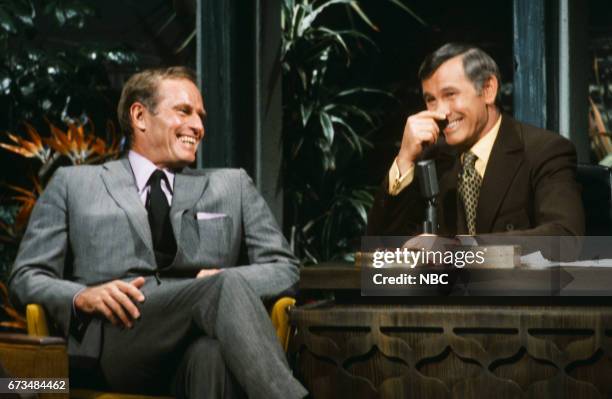
When Benny appeared with Carson, viewers were not simply watching two comedians exchange jokes. They were seeing two generations of American comedy meet across a desk.
Jack Benny belonged to the era of vaudeville and radio, when performers learned to survive without elaborate sets, rapid editing, or special effects. Johnny Carson became the defining figure of the television talk-show era. Yet the language they spoke was remarkably similar: timing, restraint, observation, and above all, the confidence to allow silence to become part of the joke.
The Man Who Could Make Silence Funny
Jack Benny developed one of the most unusual comic personas in entertainment history. His fictional version of himself was vain, cheap, perpetually 39 years old, suspicious of anyone touching his money, and convinced that he was a much better violinist than anyone else believed.
But the brilliance was never simply in the character.
Most comedians fear silence. When an audience becomes quiet, the instinct is to say something quickly and regain control of the room. Benny often did exactly the opposite. He waited.
That technique influenced generations of performers.
Johnny Carson understood it particularly well.
Carson’s famous double takes, delayed reactions and ability to recover from jokes that failed were built around the same fundamental principle: sometimes the reaction is funnier than the joke.
Carson did not need every punchline to succeed. If a joke died, he could stare at the audience, tug at his collar or acknowledge the disaster with an expression. Suddenly, the failed joke became another joke.
Jack Benny had mastered it decades earlier.

Carson Never Hid His Respect for Benny
By the time Johnny Carson became host of The Tonight Show in 1962, Jack Benny was already an institution.
Benny had conquered vaudeville, radio, movies and television. His radio program became one of America’s defining comedy shows, and the fictional universe surrounding his miserly persona became familiar to millions of listeners.
Carson belonged to the generation that grew up watching and listening to performers like Benny.
And unlike some younger stars who wanted to distance themselves from the entertainers who came before them, Carson regularly welcomed veteran performers onto his program.
The Tonight Show became something more than a promotional stop for celebrities. At its best, it became a living archive of American entertainment.
He did not have to dominate Carson’s desk. He did not need a complicated routine. His reputation entered the room before he did.
An expression could produce laughter.
A pause could produce more.
And Carson knew enough not to interfere.
One of Carson’s greatest talents as an interviewer was recognizing when his guest already knew exactly what to do.
With Benny, Carson could simply provide the stage.
Two Generations, One Understanding of Comedy
Their styles were different on the surface.
Benny’s comedy was rooted in a carefully constructed fictional personality. Carson’s humor was more conversational, topical and spontaneous. Yet both men understood an important truth about television comedy: audiences enjoy being allowed into the joke.
Neither performer constantly demanded laughter.
They invited it.
Benny would allow viewers to recognize his vanity before he acknowledged it himself. Carson frequently behaved as though the audience and he were partners observing the absurdity happening around them.
That connection created intimacy.
Millions of Americans watching from their living rooms could feel as though they were sitting only a few feet from Carson’s desk.
It was an extraordinary skill, and it helps explain why Carson remained America’s dominant late-night host for three decades.
Benny had achieved something similar during the radio era.
Listeners felt that they knew him.
They knew about his imaginary underground vault. They knew about his battered Maxwell automobile. They knew his ongoing joke about being 39. They knew his supposed stinginess and his tortured violin playing.
These running jokes became almost like family stories.
The audience was not simply listening to Jack Benny.
They were participating in the Jack Benny universe.

Behind the Stingy Character Was a Different Man
Perhaps the most interesting thing about Benny’s famous persona was how different it reportedly was from the man himself.
The miserly Jack Benny existed primarily for comedy. Friends and colleagues frequently described the real Benny as generous and supportive.
That contrast makes his character even more impressive.
Benny understood that comedy did not require audiences to believe literally everything about a performer. It required consistency.
If “Jack Benny” hated spending money, then every situation involving money could become a joke.
If Jack Benny believed he was a brilliant violinist, every skeptical reaction from another character could become comedy.
If Jack Benny insisted he was 39, simply mentioning his age could trigger laughter.
He built a comic identity so strong that audiences knew the joke before he finished telling it.
Johnny Carson similarly developed recognizable rituals. Viewers knew the desk, the curtain, Ed McMahon’s introduction, Doc Severinsen’s band and Carson’s expressions when something went unexpectedly wrong.
Television became ritual.
That ritual was part of why viewers returned night after night.
The Emotional Weight of Their Later Appearances
There is another reason footage involving Carson and Benny can feel unusually emotional today.
We know what the people sitting in those chairs could not fully know at the time: an era was ending.
Jack Benny died in December 1974 at age 80.
His death removed one of the most important bridges between vaudeville, radio and television. Benny had begun performing professionally long before television became America’s dominant entertainment medium, yet he adapted successfully every time the industry changed.
Carson would continue hosting The Tonight Show until 1992.
By then, he had become for television what Benny had once been for radio: a reassuring presence whose timing seemed effortless because audiences had watched him for so long.
The relationship between performers like Benny and Carson therefore represented something larger than friendship or professional admiration.
It represented inheritance.
Comedy is passed down that way.
A younger performer watches an older performer pause.
He notices how long the pause lasts.
He watches what happens when the audience begins anticipating the punchline.
Years later, he uses the lesson differently.
Then another young comedian watches him.
And the cycle continues.
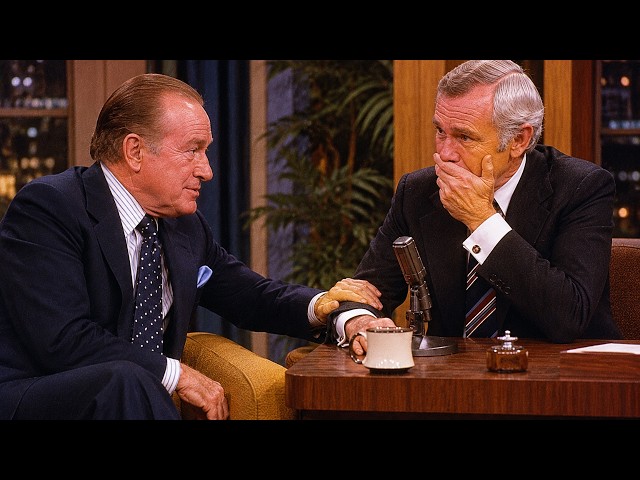
About the Dramatic “Four Words” Story
There is an important distinction worth making when telling stories about classic television.
The dramatic version in which Benny supposedly whispered four mysterious words to Carson, causing Carson to cover his face because of an obscure encounter decades earlier, should not automatically be presented as established historical fact without a verifiable recording, transcript, memoir, or contemporary account confirming the exact exchange.
That does not diminish the genuine connection between these two entertainers.
In fact, the documented history is compelling enough without embellishment.
Benny really was one of the giants who came before Carson. Carson really did admire the great comedians of earlier generations. Benny really possessed extraordinary command of timing and silence, and Carson became perhaps television’s greatest practitioner of reaction-based humor.
Those truths provide the emotional heart of the story.
The stronger article is therefore not about inventing a secret sentence.
It is about understanding what might pass silently between two performers when one knows that the other helped build the stage on which he now stands.
The Night the Joke Became Something More
Look again at an image of Johnny Carson sitting beside Jack Benny.
Forget the applause for a moment.
Forget the cameras.
Forget the millions of people who eventually watched these men.
What remains is something surprisingly human: an older entertainer nearing the end of an extraordinary journey and a younger entertainer already becoming a legend himself.
Carson had the desk.
Benny had helped create the tradition behind it.
That is why these encounters still resonate.
Jack Benny demonstrated that a comedian did not always have to shout louder, move faster or deliver another punchline. Sometimes the funniest—and most powerful—thing a performer could do was simply wait.
Johnny Carson learned the same lesson.
And eventually, an entire generation learned it from him.
The curtain would close on Jack Benny in 1974. Carson would carry late-night television forward for another eighteen years before finally saying goodnight in 1992.
But the invisible thread connecting them remained.
It can still be seen whenever a comedian allows a joke to breathe, whenever a host responds to a failed punchline with nothing but a stare, or whenever an audience begins laughing before the performer has said another word.
That is Jack Benny’s legacy.
And perhaps that is the most moving part of watching him beside Johnny Carson today: one master did not simply leave behind jokes.
He left behind timing, restraint and an understanding of silence that continued speaking long after he was gone.