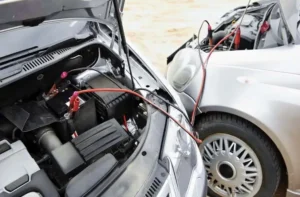
Battery failures are common in winter, and a jump-start can seem like the quickest solution. But using another vehicle to restart your car is not risk-free. Done incorrectly, the “wiring” method can damage electrical systems, overload an alternator, or even cause a short circuit.
Why Batteries Struggle in Winter
Cold weather puts significant strain on car batteries. Low temperatures reduce a battery’s capacity, which means a battery that still works in summer may not have enough power in winter.
At the same time, a cold engine needs more energy to start. If the battery is already weakened by age or use, that extra demand may be enough to leave the vehicle unable to start.
How the Wiring Method Works
The wiring method uses energy from a charged battery to help start a vehicle with a discharged battery. The process may sound simple, but it must be done carefully to avoid costly damage.
Use good-quality jumper cables with sturdy crocodile clamps and a copper core thick enough to carry the required current safely.
Before connecting the cables, stop the engine of the donor vehicle. Connect the positive terminals together first, using the positive cable. Then connect the negative terminals with the negative cable.
Once the cables are connected, start the engine of the donor vehicle and let it run for 10 to 15 minutes. This allows the discharged battery to recharge partially.
After that, stop the engine of the donor vehicle again. This helps protect the alternator and electrical circuit of the vehicle providing assistance.
Then try to start the broken-down vehicle. Once it starts, disconnect the cables in reverse order.
Mistakes to Avoid
Do not keep the donor vehicle’s engine running while starting the broken-down vehicle. This can overload the alternator and damage the electrical system.
Never reverse the polarity of the cables. A simple connection error can cause short circuits and may even lead to fire.
Avoid poor-quality cables. Cables that are too thin or clamps that are not firmly attached can cause energy loss, overheating, or other incidents.
How to Prevent Recurring Battery Problems
Check your battery regularly and replace it if it shows signs of weakness. A battery that struggles in mild weather is even more likely to fail in winter.
Protect the battery from extreme cold when possible. Parking in a garage or using an insulating battery cover can help reduce winter strain.
Before starting the vehicle, turn off headlights, the radio, and other electrical accessories. Reducing power consumption gives the battery a better chance of starting the engine.
Helping another motorist is a generous gesture, but it should be done with caution. By following the right steps, you can reduce the risk of damage and protect both vehicles.